
Fence Maintenance Tools You Need: The Complete Homeowner’s Guide
Your fence works hard every day—defining property lines, boosting curb appeal, and protecting what matters. With the right fence care tools and a reliable set of maintenance equipment, you can handle most upkeep and DIY fence repair jobs without calling a pro. This guide covers the essential tools to inspect, clean, fix, and protect wood, vinyl, chain-link, and metal fences, so your fence stays straight, strong, and good-looking year-round.
Start Smart: Safety Gear and Setup
Before you pick up a saw or sledge, protect yourself. Safety glasses, work gloves, and a dust mask or respirator are must-haves for sanding, cutting, or spraying. Add hearing protection for power tools, steel-toe boots when moving posts, and knee pads for long repair sessions. Keep a first-aid kit nearby and have a stable ladder for tall fence sections.
Good preparation saves time. A tool caddy or belt, extension cords rated for outdoors, and drop cloths for paint or stain overspray will keep your maintenance equipment organized and your worksite tidy.
The Core Fence Care Tools for Inspection and Measurement
Thorough inspections catch small problems before they become big repairs. Equip yourself with measuring and layout tools that make every fix cleaner and faster.
Key tools: tape measure (25–30 ft), torpedo or 24-in. level, post level (clips to posts for hands-free leveling), speed square, chalk line or string line, and a stud/metal detector if fastening to structures. A flashlight or headlamp helps spot rot, rust, or cracks. Keep a notebook or phone notes to list parts for your DIY fence repair run.
Cleaning and Surface Prep Tools
Clean surfaces are easier to inspect and accept coatings better. For most fences, a garden hose with a high-pressure nozzle and a stiff-bristle scrub brush will remove dirt, pollen, and grime. For deeper cleaning, a pressure washer with adjustable PSI is invaluable—use low pressure for softwoods and vinyl to avoid damage. Pair water with the right cleaners: deck and fence wash for wood, non-abrasive vinyl cleaner for PVC, and degreaser for metal surfaces.
To prep for staining or painting, have medium and fine-grit sandpaper, a hand sanding block, or an orbital sander. For weathered wood, an oxalic acid brightener evens color after cleaning. A putty knife and wire brush remove flaking paint and loose rust—vital fence care tools for long-lasting finishes.
Repair Tools by Fence Type
Choosing the right maintenance equipment depends on what your fence is made of. Below are the must-have tools for the most common materials.
Wood Fence Repair Essentials
Wood fences need routine attention to boards, rails, and posts. A solid DIY fence repair toolkit includes a hammer, claw pry bar, and nail set for pulling or driving fasteners. Pair them with exterior-grade screws and a drill/driver with impact-rated bits. A circular saw or handsaw trims pickets cleanly; a chisel tidies notches and mortises. Keep wood filler/epoxy for small rot spots and a carpenter’s glue rated for exterior use.
For finishing, stock natural-bristle brushes or a stain pad for oil-based stains, synthetic brushes for water-based products, and a pump sprayer for large runs. A paint tray, drop cloths, and masking tape help contain messes. To protect ground contact points, use gravel and a tamper to improve drainage around posts.
Vinyl Fence Repair Essentials
Vinyl is low-maintenance, but cracks and scuffs happen. You’ll want a vinyl repair kit or PVC adhesive for hairline splits, a non-abrasive cleaner and soft sponge to prevent scratching, and a heat gun for carefully reshaping minor warps. Keep replacement caps, brackets, and stainless-steel screws to avoid rust stains on bright panels.
Chain-Link Fence Tools
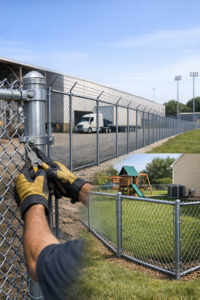
Chain-link repairs are straightforward with the proper fence care tools. A fence stretcher/come-along tensions mesh, while hog ring pliers and hog rings reattach fabric to tension wire. You’ll also need fence ties, tension bands, tension bars, and end/corner post caps. A pair of bolt cutters or heavy-duty