How to Select Fence Hardware and Accessories
Choosing the right hardware can make the difference between a fence that lasts decades and one that sags, squeaks, or fails within a year. In this in-depth fence hardware guide, you’ll learn how to select components that match your material, climate, and use case—so your project is stronger, safer, and better looking from day one. From essential gate hardware to finishing fence accessories, consider this your roadmap to a fence that performs as great as it looks.
Your Fence Hardware Guide: Plan Before You Buy
Before you start comparing hinges and latches, clarify the fundamentals of your project. This planning step ensures you choose compatible hardware, avoid return trips, and achieve a professional finish.
- Fence material: Wood, vinyl (PVC), chain link, aluminum/steel ornamental, or composite each require different hardware types and finishes.
- Purpose: Privacy, pool safety, pet containment, security, or decorative accents influence hinge type, latch security, and post reinforcement.
- Environment: Coastal, high-wind, freeze-thaw, or high-traffic areas affect corrosion resistance and durability requirements.
- Gate size and weight: Heavier or wider gates demand higher-rated hinges and bracing.
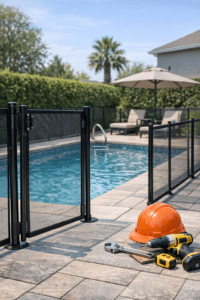
- Code and compliance: Pool and commercial codes may require self-closing hinges, self-latching hardware, and minimum latch heights.
- Style and finish: Coordinate finishes (matte black, bronze, galvanized, stainless) with the fence and home exterior.
Core Components: What Every Fence Needs
Use this section of the fence hardware guide as a checklist to understand what each component does and how to choose it wisely.
Posts and Post Anchors
Posts carry loads. For wood and vinyl, buried posts set in concrete are standard; in decks or slabs, use surface-mount post bases rated for exterior use. Choose hot-dip galvanized or stainless anchors in corrosive or coastal environments.
Fasteners
Exterior-grade screws often outperform nails by resisting pull-out and making adjustments easier. Select polymer-coated or stainless screws for wood; use self-tapping screws for metal; and avoid over-tightening in vinyl. Match screw length to penetrate at least 1.5 times the thickness of the material being fastened.
Brackets and Rail Hangers
Brackets connect rails to posts and must match your fence material. Wood rail hangers prevent splitting; vinyl rail brackets include covers for a clean look; metal systems use bolt-on or weld-on brackets. In sloped yards, choose adjustable brackets.
Gate Frames and Bracing
Gate sag is the number one failure. Use welded or reinforced frames and diagonal braces that transfer load to the hinge side. Anti-sag kits, corner braces, and tension cables help square and stabilize gates over time.
Hinges
Hinges must be rated for gate weight and width. Options include strap, T-hinges, butt hinges, ball-bearing, and spring/self-closing designs. Adjustable hinges simplify alignment and compensate for settling.
Latches and Locks
Choose gravity latches for simple residential gates, magnetic latches for smooth operation, and keyed/deadbolt latches for higher security. For pools, select code-compliant self-latching models and mount at the correct height.
Fence Accessories
Accessories enhance protection and curb appeal. Post caps, finials, decorative scrolls, solar lights, privacy slats, gate stops, and bumpers all personalize your fence while solving practical problems like water intrusion or gate rattle.
Choose by Fence Material
Wood Fences
Wood moves with humidity, so hardware should accommodate seasonal expansion. Use exterior-rated, polymer-coated or stainless screws to reduce staining and corrosion. Strap or T-hinges distribute load across wider areas of the gate, and black powder-coated steel pairs well aesthetically with cedar or redwood. Consider a tension cable or anti-sag brace on gates over 36 inches wide.
Vinyl (PVC) Fences
Vinyl is lighter but more flexible than wood. Opt for hinges and latches designed for vinyl with backing plates to prevent pull-through. For larger gates, ensure internal aluminum reinforcement in rails and stiles. Use UV-stable, non-chalking finishes and avoid overtightening fasteners to prevent cracking.
Chain Link Fences
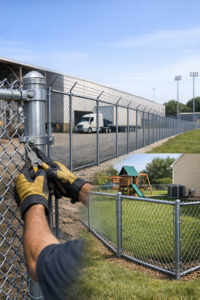
Hardware is specialized: tension bands, brace bands, rail ends, tension bars, and turnbuckles maintain fabric tension. For gates, use fork latches, adjustable hinges, and if needed, gate wheels on extra-wide spans. Choose galvanized or aluminized steel with proper coating thickness; in coastal areas, consider powder-coated over-galvanized for extra life.
Aluminum and Steel Ornamental Fences
With metal picket systems, choose matching alloy hardware. Bolt-on brackets simplify DIY; weld-on offers a sleeker, permanent look (typically for steel). Ball-bearing or concealed hinges maintain clean lines. Use gate hardware with anti-lift features and tamper-resistant fasteners for enhanced security.
Composite Fences