
How to Troubleshoot Fence Gates
A fence gate does more than create an entry point. It protects your property, adds privacy, supports curb appeal, and helps your entire fencing system function properly. When a gate starts to sag, stick, drag, or refuse to latch, the problem can quickly go from minor annoyance to security issue. The good news is that many common gate problems can be identified early and fixed with a practical approach.
This guide explains how to troubleshoot fence gates step by step, with a focus on fence gate repair, prevention, and long-term performance. Whether you have a wood, vinyl, or metal gate, understanding the source of the issue will help you make smarter decisions and reduce costly damage. Along the way, we will also cover useful gate installation tips and simple fence gate maintenance habits that help gates stay functional year-round.
Why Fence Gates Commonly Develop Problems
Fence gates are used constantly, which means they experience more wear than most other parts of a fence. Unlike stationary panels, a gate relies on moving hardware, balanced weight distribution, and proper alignment. Even a small shift in the post, hinge, or latch can affect how the gate opens and closes.
Some of the most common causes of gate trouble include soil movement, moisture exposure, rusted hardware, loose fasteners, improper weight support, and poor original installation. In some cases, a gate issue is not caused by the gate itself at all, but by the surrounding post or fence line shifting over time. That is why effective fence gate repair begins with careful observation rather than guessing.
Start With a Basic Visual Inspection
Before tightening anything or replacing parts, inspect the gate while it is both closed and open. Look for obvious signs of strain, misalignment, or damage. Stand back and check whether the gate appears level. Then open it slowly and listen for scraping, popping, or resistance.
Pay close attention to the hinges, latch, frame, and the gate posts on both sides. Look for cracked wood, bent metal, rust, missing screws, swollen boards, or gaps that have widened over time. If the gate drags on the ground, notice where the contact happens. If it does not latch, identify whether the latch has shifted or the gate is hanging unevenly.
This simple review often reveals whether you need a minor adjustment or a more involved fence gate repair.
How to Troubleshoot the Most Common Fence Gate Problems
1. The Gate Is Sagging
A sagging gate is one of the most frequent issues homeowners face. This usually happens when the gate frame is too heavy, the hinges loosen, or the support post begins to lean. In wooden gates, sagging can also result from long-term moisture exposure that weakens the frame.
First, check whether the hinges are firmly attached to both the gate and the post. Tighten loose screws and replace stripped or rusted fasteners. If the screws no longer grip well, longer exterior-grade screws may help. Next, inspect the post. If the post is leaning, the real problem may be in the foundation or surrounding soil.
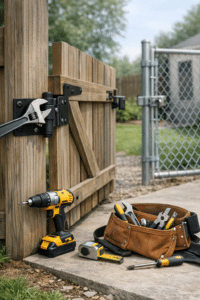
For wood gates, adding a diagonal brace can improve structural support. The brace should run from the lower hinge side to the upper latch side to help carry the load. This is one of the most effective fence gate repair strategies for recurring sagging.
2. The Gate Drags on the Ground
If your gate scrapes the driveway, grass, or threshold, there may be a sagging issue, but not always. Ground movement, seasonal expansion, or poor clearance can also cause dragging. Start by checking whether the gate is level. If one side hangs lower, adjust the hinges or reinforce the frame. If the gate remains level but the ground has risen due to landscaping or frost heave, you may need to trim the bottom edge or regrade the area beneath it.
Dragging should not be ignored. Continued friction puts stress on the hinges and can eventually twist the frame. Regular fence gate maintenance helps catch this early before the hardware wears out.
3. The Gate Will Not Latch Properly
When a latch no longer lines up, the cause is often subtle movement in the gate or post. A latch problem may appear minor, but it affects both security and convenience. Close the gate slowly and observe whether the latch strikes too high, too low, or too far to one side.
If the misalignment is small, repositioning the latch hardware may solve the problem. If the difference is larger, inspect for sagging hinges or a shifting post. In metal gates, bent latch components may need replacement. In wood gates, swollen boards from humidity can also prevent a smooth close. In that case, sanding or sealing affected edges may help restore clearance.
4. The Gate Is Hard to Open or Close
Resistance during movement usually points to hinge trouble, swelling materials, or frame distortion. Metal hinges may be rusted or clogged with dirt. Wooden gates may absorb moisture and expand, especially in rainy or humid climates. Vinyl gates may shift if hardware loosens or support posts move.
Clean hinges thoroughly and lubricate them with a product appropriate for outdoor use. Then test the swing again. If the gate still sticks, inspect the frame for warping. Sometimes the fix is simple, but repeated resistance often signals that the gate was installed with too little clearance. This is where good gate installation tips matter, because a properly installed gate leaves room for weather-related expansion and long-term movement.
5. The Gate Post Is Leaning
A leaning post is often the root cause of multiple gate issues. If the supporting post shifts, the gate can sag, drag, and fail to latch all at once. Check whether the post moves when pushed by hand. If it does, the footing may be loose or deteriorating.
Minor movement may sometimes be corrected with bracing, but severe leaning often requires resetting the post in concrete. If you are planning a larger fence gate repair, always address the post first. Replacing hinges or latches will not solve the problem if the support structure remains unstable.
Fence Gate Maintenance Tips That Prevent Bigger Repairs
Consistent fence gate maintenance is the best way to avoid major repairs. Gates rarely fail overnight. In most cases, there are early warning signs such as loosened hardware, slight dragging, small cracks, or changing latch alignment.
Inspect your gate every few months and after severe weather. Tighten hinges, screws, and latch components before they become a larger issue. Keep the swing area clear of mud, stones, plant growth, and debris. Clean metal hardware to reduce rust and apply lubricant when needed.
For wooden gates, sealing or staining the surface helps reduce moisture absorption, swelling, and rot. Check the bottom of the gate for water damage, since that area often deteriorates first. For metal gates, watch for corrosion at welds and fastener points. For vinyl gates, inspect for stress cracks and confirm that the internal support remains secure.
Routine fence gate maintenance also includes observing changes in the surrounding ground. Soil settling, poor drainage, and pooling water can weaken gate posts over time. Keeping water away from the base of the post is a simple but valuable preventive measure.
Helpful Gate Installation Tips to Avoid Future Problems
Many gate issues begin with installation mistakes. Even high-quality materials can fail early if the gate is too heavy for the hardware, the post is not set deeply enough, or the clearance is too tight. A few smart gate installation tips can make a major difference in performance.
First, make sure the support posts are strong enough for the gate’s size and weight. Gate posts generally need deeper, more secure footings than line posts because they carry dynamic loads every time the gate swings. Second, choose heavy-duty hinges and latches rated for exterior use. Third, confirm that the frame is square during installation. A gate installed out of square will often sag prematurely.
Another essential gate installation tip is to allow proper spacing around the gate. Gates need enough side and bottom clearance to handle seasonal expansion, minor ground movement, and regular use. Finally, always consider drainage. Water accumulation near gate posts can shorten the life of the entire assembly.
When to Repair and When to Replace
Not every gate problem calls for a full replacement. Many issues can be solved with targeted fence gate repair, especially if the frame is still structurally sound. Replacing hinges, latches, screws, braces, or even a single post is often enough to restore reliable operation.
However, replacement may be the better option if the gate frame is severely warped, rotted, cracked through multiple sections, or no longer matches the strength requirements of the opening. Repeated repairs on a poorly built or badly installed gate can cost more over time than starting fresh with better materials and proper design.
If you are unsure, compare the condition of the gate frame, hardware, and posts together. A stable post and solid frame usually justify repair. But if the structure, support, and hardware are all failing at once, replacement is usually the smarter long-term choice.
Final Thoughts on Troubleshooting Fence Gates
Troubleshooting a fence gate becomes much easier when you break the problem down into parts: frame, hinges, latch, post, and ground conditions. Most issues are caused by wear, movement, moisture, or hardware failure, and many can be corrected before they become serious. With regular fence gate maintenance, practical gate installation tips, and timely fence gate repair, you can keep your gate secure, smooth, and dependable for years.
If your gate is showing signs of trouble, do not wait for it to stop working completely. Inspect it now, make the needed adjustments, and protect your fence investment with routine care.