
Pool Fence Safety Requirements and Options
A swimming pool can be one of the best features of any home, but it also comes with serious safety responsibilities. If you are planning a new pool or upgrading an older one, understanding pool fence installation requirements is essential. The right barrier helps protect children, pets, and guests while also helping you comply with local fence regulations.
Today, homeowners have more choices than ever when it comes to pool safety fencing. From removable mesh barriers to ornamental aluminum and glass enclosures, there are solutions for different budgets, property layouts, and design preferences. The key is choosing an option that not only looks good but also delivers reliable protection and meets code.
In this guide, we will cover the main safety requirements for pool fences, explain what to look for during pool fence installation, and compare the most common fencing materials and styles.
Why Pool Fencing Matters
Pool fences are not just a cosmetic addition. They are a critical safety feature designed to reduce the risk of unsupervised access to the water. Drowning remains one of the leading accidental risks for young children, and a properly secured fence can provide an important layer of protection.
Effective pool safety fencing creates a physical barrier between the pool and the rest of the property. It helps prevent a child from wandering into the pool area unnoticed and can also discourage access by pets or neighborhood visitors. For many homeowners, a pool fence also offers privacy, defines the outdoor space, and may even reduce liability concerns.
Most importantly, a compliant fence is often required by law. Local and state fence regulations vary, but many jurisdictions have strict rules for residential pool barriers. Failing to meet these standards can result in delays, fines, failed inspections, or mandatory changes after installation.
Common Pool Fence Safety Requirements
Before starting any pool fence installation project, check with your local building department or a licensed contractor familiar with area codes. While exact rules differ by location, several requirements are widely used.
Minimum Fence Height
Most fence regulations require pool fences to be a minimum height, often around 48 inches or higher. The purpose is to make climbing over the barrier more difficult for children. Some areas may require taller fencing depending on the property type or pool design.
Limited Ground Clearance
The space between the bottom of the fence and the ground is usually restricted. This gap is often limited to a few inches so a small child cannot crawl underneath. During pool fence installation, the ground should be measured carefully, especially if the area is uneven or sloped.
Small Openings Between Pickets or Panels
Openings in the fence must typically be narrow enough to prevent a child from squeezing through. This applies to vertical pickets, horizontal rails, and decorative elements. Well-designed pool safety fencing balances visibility with safety by limiting any gaps that could allow entry.
Self-Closing and Self-Latching Gates
The gate is often the most important part of the entire barrier. In many areas, fence regulations require gates to swing outward from the pool area, close automatically, and latch by themselves. The latch is generally placed high enough that a small child cannot easily reach it.
If the gate does not reliably shut every time, the fence may not pass inspection. That is why professional pool fence installation is often worth considering, especially for homeowners who want confidence that all hardware is working properly.
Climb-Resistant Design
A pool fence should not be easy to climb. Horizontal rails, decorative footholds, nearby planters, benches, or air-conditioning units can create unintended access points. Good pool safety fencing design takes the surrounding environment into account and removes anything that could assist climbing.
House Access and Alarms
Some properties use the home itself as part of the pool enclosure. In these cases, local fence regulations may require additional protections such as door alarms, self-closing doors, or other access-control measures. Even if your fence meets all height and gate rules, door safety may still be part of compliance.
Popular Pool Fence Options
There is no single best fence for every property. The right choice depends on your priorities, including safety, durability, maintenance, appearance, and budget. Here are the most common options for pool safety fencing.
Mesh Pool Fencing
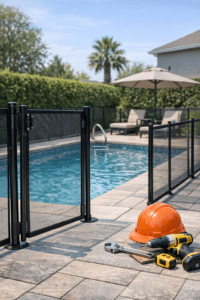
Mesh fencing is one of the most popular choices for residential pools. It typically consists of durable mesh panels supported by poles anchored into the deck.
Benefits:
Mesh fences are lightweight, climb-resistant, and often removable. They provide a clear view of the pool while maintaining a strong safety barrier. Many homeowners choose this option because it is practical, relatively affordable, and specifically designed for child safety.
Considerations:
Not all mesh systems are the same. The quality of anchors, gate hardware, and mesh strength matters. Professional pool fence installation can help ensure the fence is tensioned and secured properly.
Aluminum Fencing
Aluminum fencing is a durable and attractive option that works well for permanent pool enclosures. It often features vertical pickets with minimal maintenance requirements.
Benefits:
It is rust-resistant, long-lasting, and available in many styles and colors. Aluminum offers a clean, upscale appearance while still meeting many fence regulations when built with the correct spacing and gate features.
Considerations:
Some decorative designs may not be suitable if they create climb points or improper spacing. Always confirm that the chosen style is intended for pool safety fencing rather than general yard use.
Glass Pool Fencing
Glass fencing is often selected for modern homes and high-end outdoor spaces. It uses tempered safety glass panels supported by posts or specialized hardware.
Benefits:
Glass provides an unobstructed view and a sleek appearance. It can make a small pool area feel more open while still functioning as a secure barrier when installed correctly.
Considerations:
Glass tends to be one of the more expensive options for pool fence installation. It also requires regular cleaning to maintain its appearance. As with any system, the gate and latch must still meet local fence regulations.
Vinyl Fencing
Vinyl fencing can provide privacy and a polished look, and it is resistant to rot, pests, and weather damage.
Benefits:
It is low-maintenance and available in solid or semi-private styles. For homeowners who want to separate the pool area visually from the rest of the yard, vinyl can be a strong choice.
Considerations:
Not every vinyl fence style is ideal for pool use. Some designs may have horizontal rails or structural features that affect compliance. A contractor experienced in pool safety fencing can recommend code-appropriate options.
Wood Fencing
Wood fencing offers a classic appearance and strong privacy, but it requires more maintenance than many alternatives.
Benefits:
It can be customized to suit many home styles and may be cost-effective depending on the material used.
Considerations:
Wood can warp, crack, or deteriorate over time. Loose boards, reduced stability, or gaps caused by aging may create safety issues. Ongoing inspections are important if wood is used for pool fence installation.
How to Choose the Right Pool Fence
When comparing fencing options, think beyond appearance alone. The best pool safety fencing should fit your daily needs as well as your legal requirements.
Prioritize Safety and Code Compliance
Start by reviewing local fence regulations. A beautiful fence that fails inspection will only create extra expense and frustration. Make sure your preferred material and design can meet the required height, spacing, gate, and latch rules.
Consider Visibility
Being able to see the pool area clearly can improve supervision. Mesh, aluminum, and glass fencing are often chosen because they maintain sightlines. If young children use the yard frequently, visibility may be an important factor.
Think About Maintenance
Every fencing material has different maintenance needs. Aluminum and vinyl are usually easier to care for than wood, while glass requires regular cleaning. Before committing to a style, consider how much upkeep you are willing to handle.
Match the Fence to Your Property Layout
Sloped ground, landscaping, deck material, and existing structures can all affect pool fence installation. A fence that works perfectly on one property may need major adjustments on another. Measuring carefully and planning gate placement in advance can save time and money.
Professional Installation vs. DIY
Some homeowners consider installing a pool fence themselves, especially with removable mesh systems. While DIY may seem cost-effective, there are risks if the fence is not aligned, anchored, or latched correctly.
Professional pool fence installation often provides several advantages. Contractors who specialize in pool safety fencing understand local fence regulations, know how to address site-specific challenges, and can help ensure the finished project passes inspection. They may also recommend the best gate placement, hardware, and layout for both safety and convenience.
If you choose the DIY route, be sure to review manufacturer instructions carefully and verify all code requirements before purchasing materials.
Maintenance and Ongoing Safety Checks
Installing a compliant fence is only the first step. To keep your barrier effective, inspect it regularly. Gates should close and latch properly every time. Posts should remain secure, and there should be no new gaps under the fence or between components.
Trim back plants, remove climbable objects, and replace damaged hardware promptly. Even the best pool safety fencing can become less effective if maintenance is ignored. Seasonal weather, ground movement, and everyday use can all affect performance over time.
It is also wise to review local fence regulations if you make changes to the pool area, renovate your yard, or replace sections of the fence. Updates to codes may apply when modifications are made.
Final Thoughts
The right pool fence protects your family, supports responsible pool ownership, and helps you stay compliant with local laws. Whether you choose mesh, aluminum, glass, vinyl, or wood, successful pool fence installation starts with understanding safety standards and selecting a design built for lasting performance.
Ready to improve your pool area? Explore your pool safety fencing options, review your local fence regulations, and speak with a qualified installer to create a safer, more secure backyard today.